

Financial Ombudsman sees record number of investment scams
The Financial Ombudsman Service (FOS) received 31,300 fraud and scam complaints in the year January – December 2025.
Of those 31,300 complaints around 20,000 were from people who were defrauded through the use of Authorised Push Payments (APP) to scammers.
APPs involve the transfer of money directly from the victim’s bank account to the criminal fraudster. Some cases also included the use of a debit or credit card for payment.
In both situations, the payment is treated by the financial provider as “authorised” because the victim has approved it.
More than half of the 20,000 APP scam complaints related to online investments. Most frequently they start as adverts on social media or search engines promoting “high return” opportunities, often linked to cryptocurrency. Typically these will be fake celebrity endorsements or made to look like “senior account managers” promising fast and guaranteed returns.
From 7 October 2024 banks must now refund victims of fraud up to £85,000 within five days. If the bank does not do this, the consumer can take the issue to the FOS which then considers whether a bank should have done more to protect its customer from harm and whether the customer did enough to protect themself. The FOS then decides whether the consumer should be refunded.
A study published 14.02/26 by email validation service ZeroBounce, revealed that social media fraud generates the highest search interest among Britons worried about scams. Volumes are nearly six times the average for fraud-related queries.
Top 10 most-searched fraud types in the UK
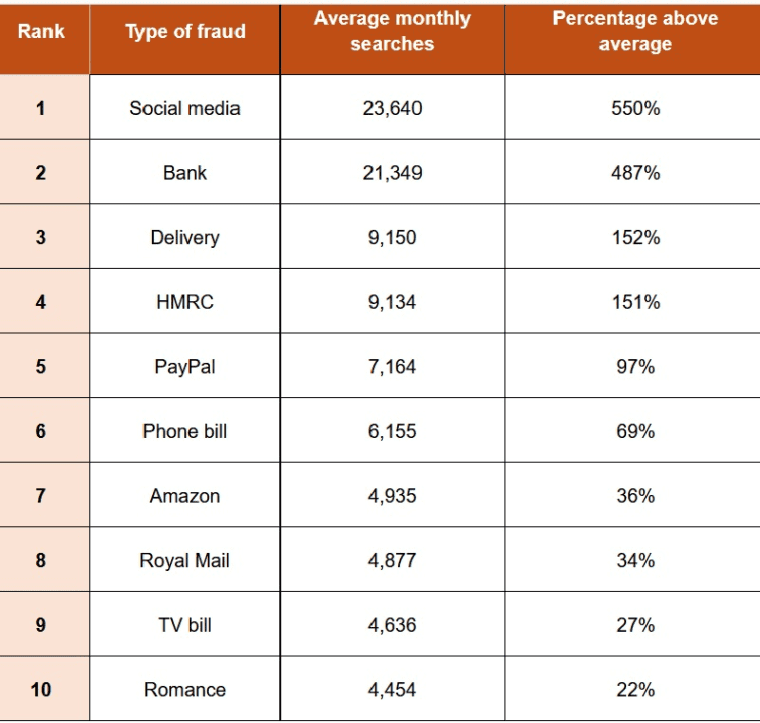
Credit: ZeroBounce
Patrick Hurley, Ombudsman Director at the Financial Ombudsman Service, said:
If you’re ever asked to transfer money for an investment or a job opportunity, pause and do your research first. If it sounds too good to be true, it probably is a scam.
These scams often start with a small investment that appears to grow quickly. Victims are then encouraged to invest larger sums, only to be told they must pay fees, taxes or charges before they can withdraw the money. In reality, the money is lost to the scammer.
Online investment scams are by far the most complained about scam type the Financial Ombudsman sees, followed by employment scams.
@thecomplainingcow In the year January – December 2025 the Financial Ombudsman Service (FOS) received 31,300 fraud and scam complaints. Of that 31,300 around 20,000 were from people who used authorised push payments (APP) to scammers. APPs are where people transfer money directly from their bank account to another. Cases also included where people had used a debit or credit card. In both these cases, the payment is treated as authorised by the financial provider. Over half of the 20,000 APP scam complaints related to online investment scams. Most frequently they start as adverts on social media or search engines promoting “high return” opportunities, often they are linked to cryptocurrency. Typically these will be fake celebrity endorsements, or made to look like senior account managers promising fast and guaranteed returns. These often begin with adverts on social media or search engines prompting ‘high-return’ opportunities, frequently linked to cryptocurrency. Victims may encounter fake celebrity endorsements or deal with supposed ‘account managers’ who promise fast and guaranteed profits. From 7 October 2024 banks must now refund fraud victims up to £85,000 within five days If the bank does not do this, the consumer can take the issue to the FOS which then considers whether a bank should have done more to protect its customer from harm and whether consumers did enough to protect themselves and decide whether the consumer should be refunded. #scam #fraud #refunds #crypto #cryptocurrency
Tips to avoid being scammed:
- If you are warned by the bank that you may be being scammed, listen, answer questions and do your research. Take a step back.
- If you are being pressured to act quickly, this is a red flag and breaches the Digital Markets, Competition and Consumers Act 2024. No genuine company should be using pressure tactics.
- If you receive a phone call from someone saying they are from your bank, remember that numbers can be cloned. Tell them you will phone the bank. Put the phone down and – using a different line if possible – ring your bank to check. The number will be on the back of your card.
- Go to the FCA’s Firm Checker to see if a firm is authorised for the services being offered before investing or making payments.
- Be cautious of any social media adverts. Scammers often use fake celebrity endorsements or promises of high returns to lure victims.
- Check details seem genuine: If someone contacts you claiming to represent a recruitment company, try contacting them using details listed on the genuine company’s website.
- Websites can be cloned to look like the real thing. They look legitimate and exactly like the real site being imitated. Go direct to the site, don’t follow links. See How to use consumer reviews. Look for evidence that the company really exists. Check com
 If it sounds too good to be true… it is not true…!
If you have been scammed
Hopefully you will have paid by credit card. The provider is jointly responsible for purchases so should refund the money. Submit a Section 75 claim. For debit cards or for items under £100 use the voluntary “Chargeback” scheme. See How to claim refunds using credit and debit cards, Consumer Credit Act 1974.
Report the scam to Report Fraud who won’t prosecute the perpetrator but will collate evidence and build a picture.
Forward SMS text messages to 7726 (free).
Change passwords on Amazon/banks and monitor your statements.
Further help to avoid becoming a victim of fraud
Consumer Champion and Cyber Security expert provide advice on avoiding online fraud. I joined forces with James Bore from cyber security firm Bores Consultancy to provide some tips on how to stay safe when shopping online.
How to prevent being scammed on marketplaces.
Watch out for scam texts and emails!
Black Friday warning: Don’t let the scammers catch you out