
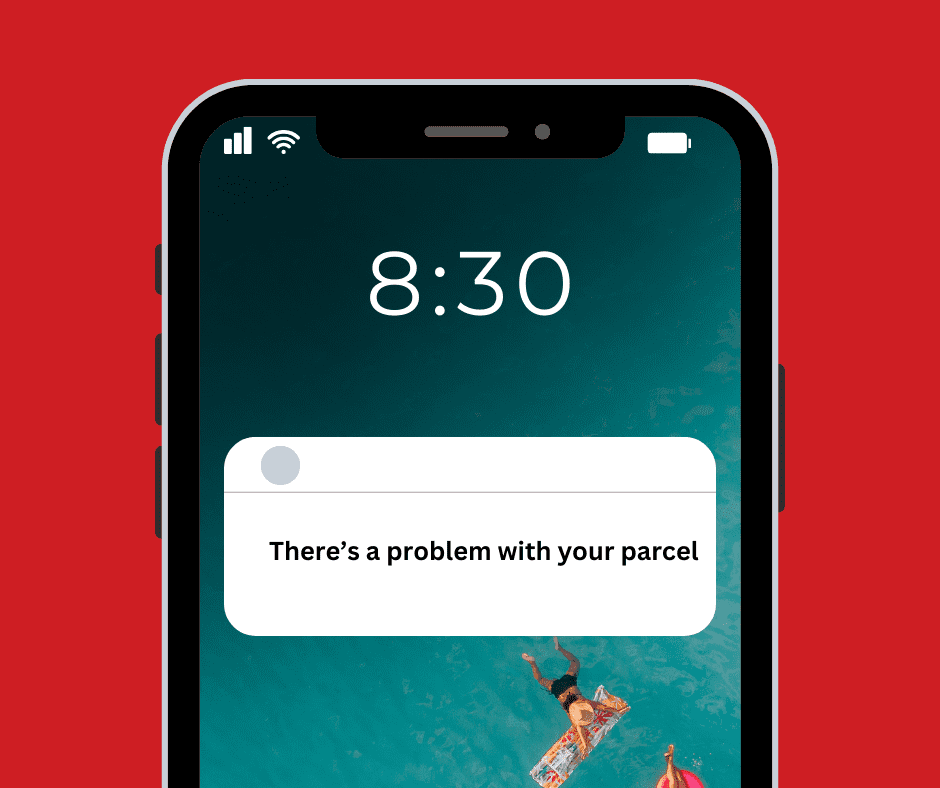
Scam text & emails what you need to know
There are so many scam texts and emails it is hard to keep up with them all. Some of the most common ones look like they come from a courier. You need to know how to spot a scam text or email relating to a delivery so you don’t get lose money or personal data. How do you recognise a scam and protect yourself.
How to tell scam courier texts and emails

Courier scam types
1) You might receive a text or email from a scammer asking you to click on a link to enter your details. But if you click on it, scammers will then take your personal data and use them.
2) Texts from scammers might ask you to download an app for tracking your parcel taking you to a site that looks legitimate. However the site will download malware, steal your passwords and take control of your phone.
3) A link may take you to a site to make a payment for a fictitious parcel.
4) If you are a seller on a marketplace and a buyer says that they want the item urgently offering the full price if you pay for the courier, then it’s probably a scam. They will send a fake confirmation email of payment and then send a request to you to pay the fake “courier” fee. You do so and will never hear from the person again.
5) A phone number may be provided, asking you to call. This will be a scam that asks for private information or tricks you into calling an expensive premium rate number.
6) It’s easy to get caught out by a scammer. Adam French is a highly knowledgeable and experienced consumer expert and has spent years writing about scams. Even he nearly got caught!
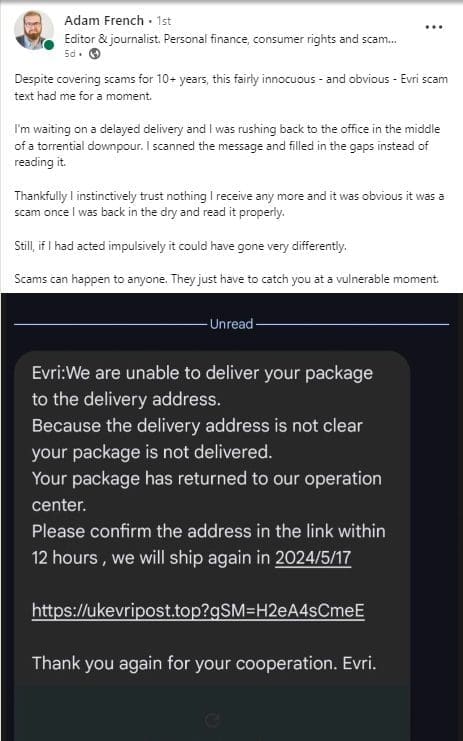
How to avoid being scammed by a courier text or email
1) It is highly likely that the text or email is a scam if you receive one about a delivery you aren’t expecting.
2) If you have ordered an item and you receive a text or email asking for your details, stop and think why when you have already given them! If they have your number or email address, the scammer already has some of your details.
3) Do not click on any links within a text or email. If you have ordered an item, go to the online store from which you ordered and track your package through the site.
4) Check the email address of the message carefully. It will probably be one or two letters different to the address you would expect.
5) When a text or email is not addressed to you personally, be suspicious. If you have ordered an item, the trader will have your details. If not a bought item, a sender will have put your details on the parcel!
6) Grammar in the message may be poor, often where something has been translated into English. Look for incorrect spellings.
7) Royal Mail will only send a letter or put a card through your door if there is an additional amount to pay on underpaid postage or if you were out when they called.
8) Follow up anything to do with deliveries when you are calm and not rushing around.
9) See How to prevent being scammed on marketplaces regarding scams including the courier scam.
10) Don’t ring a number provided for you to call about your package. If you ever want to contact a courier company, go outside of the link and contact them directly.
View this post on Instagram
Further help with shopping safely online
Consumer Champion and Cyber Security expert provide advice on avoiding online fraud. I joined forces with James Bore from cyber security firm Bores Consultancy to provide some tips on what to look out for to stay safe shopping online.
Doorstep scams
View this post on Instagram
How to complain about genuine deliveries
How to complain about a delivery, online and mail order.
How to complain to get refunds and more
Top 20 Tips on how to complain effectively.

If you need more help, information and tips with how to quote Acts, template letters and advice on how to complain effectively don’t forget the GET THE BOOK! How To Complain: The ESSENTIAL Consumer Guide to Getting REFUNDS, Redress and RESULTS!
101 Habits of an Effective Complainer provides you with more tips.
 Purchase and download templates to help resolve your complaint.