

Lloyds Bank reveals increasing number of victims
I answer one of the most common consumer questions I receive in the weekly The Complaining Cow Consumer Column. Consumers ask me a variety of questions across my social media platforms, Instagram, Facebook, TikTok and Threads.
Whilst I occasionally get asked about fraud, it is not as often as other consumer queries, despite the continued increase in fraud cases. This is partly due to people believing they won’t get caught out and their embarrassment when they become a victim. So, this week I am covering how to protect yourself and what to do if you have been stung.
Lloyds Bank has published figures today (11 May 2026) revealing that the number of people being scammed over football tickets has gone up by 36% over the past six months, compared to the same period the previous year. On average victims are losing £215, although many are losing much more. The total amount lost by victims has increased by 42%, compared to last year.
Almost a third (32%) of all ticket scams are football related, with fraudsters expected to exploit international demand for the biggest games of the year, including the World Cup, FA Cup Final and Champions League Final.
Protect yourself from football ticket fraud (and what to do if you’re caught out)
For football fans, there’s no experience quite like seeing your team playing live at a stadium. However, tickets can be costly and difficult to obtain, especially for key matches. And there are plenty of fraudsters out there who would like to steal your hard-earned money in exchange for fake tickets or even no tickets at all!
Tik Tok video explaining key points about football ticket scams:
@thecomplainingcow Football ticket scams are getting worse 👀 According to Lloyds Bank: 👉 scams are up 36% 👉 victims are losing hundreds of pounds on average 🚨 Never pay by bank transfer 🚨 Avoid social media sellers 🚨 Watch for urgency tactics 🚨 Be careful of fake websites And remember — padlock symbols do NOT guarantee a website is genuine What’s the biggest scam warning sign you look out for? 👇 #consumeradvice #fraud #scams #premierleague #tickets
10 Top tips on how to safely buy football tickets
According to the Lloyds research, most scams are perpetrated on social media. 56% of them on Facebook (including Marketplace), followed by 23% on X, formerly known as Twitter. It’s easy to get misled so keep in mind the following:
1) For football game tickets, only buy directly from the clubs, the tournament’s official ticketing platforms, or their official partners.
2) Never buy from third-party sellers, under any circumstances.
3) Do not buy tickets on social media. It is easy for scammers to sell fake tickets, using adverts and in marketplaces and groups.
4) If it sounds too good to be true, it probably is. If a match is already sold out you are unlikely to get tickets at prices that aren’t inflated on the secondary ticket seller sites.
5) Use a credit card to pay for tickets. You will be covered by the “Section 75” of the Consumer Credit Act for all purchases over £100. The credit card company is equally liable, so if anything goes wrong it will refund you. Debit cards do not have this cover, although you may be able to use “Chargeback”, a voluntary scheme for debit cards and purchases under £100.
6) Do not pay by bank transfer. If you are asked to do this it is a big “red flag”. Bank transfer happens quickly, is more difficult to trace and you will not have “Section 75” or “Chargeback” cover.
7) Be mindful of high-pressure sales tactics, such as using phrases like “must sell now” to create a sense of urgency, so that you buy immediately.
8) Turn on MFA (multi-factor authentication) on your social media accounts. It doesn’t guarantee safety, but it provides much better security than a simple password. If anyone asks you for a code to access their account, it’s very likely an attempt to take it over. They’ll then try to use that to defraud your friends and family, whether that’s about trying to sell them non-existent tickets, or a whole host of other scams.
9) Emails, texts and even online adverts may not take you to genuine sites or real offers. If in any doubt, or if the message is unexpected, then going directly to the site, by typing in the website address you’ve used in the past, is always safer. If it’s not a site you’ve used before, search for it by name, and follow the search results. Although be aware that being high in search results does not mean a site is real.
10) Websites with a padlock have an SSL certificate, which only protects your connection, not whether the site is genuine. You should never enter card details on a site without a padlock, but a fake site can have one too, so it doesn’t mean you’re safe. Always make sure the site is genuine, because the padlock protects the journey of your data, not where it ends up.
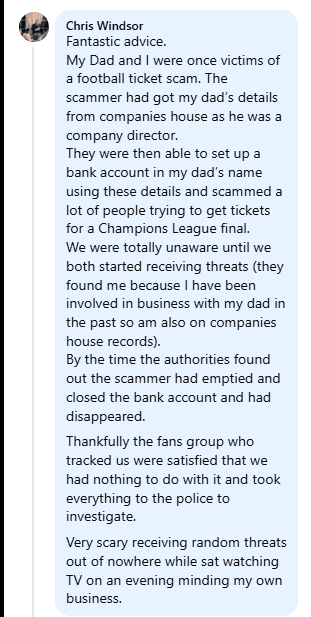
What can you do if you become a victim of fraud?
Fraud is the fastest growing form of crime in the UK and the most likely form of theft to affect you.
It is important that if you have encountered fraud to discuss it with the authorities and with family, friends and work colleagues. Reluctance to talk about these crimes is part of what makes them so successful.
Report the matter to Report Fraud.
It won’t investigate the case directly but reports are passed to the National Fraud Intelligence Bureau who are responsible for assessing them and ensuring that they reach the right place. The information is analysed by law enforcement and private sector specialists to detect patterns of activity and behaviour for investigation.
If you used a credit or debit card, contact your bank as soon as possible. Submit a “Section 75” or “Chargeback” request. If they refuse to make the refund you can take the matter to the Financial Ombudsman.
Further help to avoid becoming a victim of fraud
Consumer Champion and Cyber Security expert provide advice on avoiding online fraud. I joined forces with James Bore from cyber security firm Bores Consultancy to provide some tips on how to stay safe when shopping online.
How to prevent being scammed on marketplaces.
Watch out for scam texts and emails!
Further help with asserting your consumer rights
Top 20 Tips for how to complain effectively
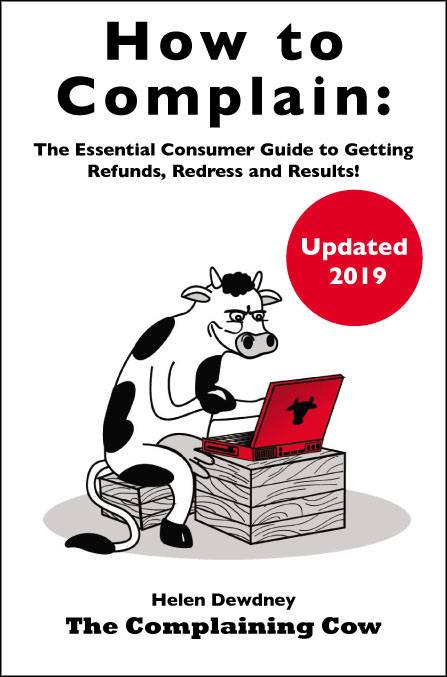
If you need more help, information and tips with how to quote Acts, template letters and advice on how to complain effectively don’t forget the GET THE BOOK! How To Complain: The ESSENTIAL Consumer Guide to Getting REFUNDS, Redress and RESULTS!

101 Habits of an Effective Complainer provides you with more tips

Purchase and download templates to gain redress swiftly
Helen Dewdney regularly speaks at conferences, business events and corporate training sessions about consumer trust, complaints and customer experience.