

Regulator finally acts on Veterinary sector
Update: The remedies became legally binding on 22 September 2026 and vets have up to 12 months to introduce the changes. Here is the UK vets sector timetable for remedies, according to the CMA UK vets sector timetable for remedies.
The Competition and Markets Authority (CMA) has finally completed its long-awaited report examining the veterinary sector and laying down new rules.
Published on 24 March 2026, the CMA has defined a number of requirements that it will introduce over the next couple of years. The elements that will affect consumers are shown below. (Other matters, not shown here, include managing vet employment contracts.)
This is an investigation that was launched by the CMA in September 2023, two and a half years ago! Considering that the UK is a nation of pet lovers (11 million dogs and 10 million cats), this is a consumer area that is well overdue for action by the regulator.
Let’s have a look at the changes the CMA is proposing to introduce.
Requirements for the veterinary sector
The CMA’s report has set out detailed guidance for changes in the sector. See What veterinary businesses and vets need to do following the CMA’s final vets report for more details and the probable time scales.
Providing general information on vet practice ownership, prices and services
Pet owners will be able to compare prices and services across veterinary practices which must provide transparent pricing information.
First Opinion Practices (FOP) are the initial, primary point of contact for veterinary care, providing general services such as vaccinations, consultations and routine surgeries. They can be compared to General Practitioners (GPs) in human health.
All veterinary businesses operating one or more FOP must publish clear and accessible information about:
- out of hours provision, qualifications and accreditations online and in premises
- Price lists for a defined list of services and commonly sold flea, tick and worm products and provide a link to the Veterinary Medicines Directorate (VMD) Register of Online Retailers
- what is included in pet care plans (if offered) and the prices of items when bought outside the plan
- key practice information (including prices).
Providing information and policies on treatments
Pet owners will be entitled to full information about support and treatments they need. Veterinary businesses must provide:
- a written estimate to indicate the costs of recommended treatment(s) where likely to be more than £500 (including VAT)
- updated estimates when costs are likely to increase by 20% or £500 (whichever is lower)
- an itemised bill
Policies and processes must be in place to ensure that veterinary professionals are able to act in accordance with relevant provisions of the RCVS Codes and Guidance.

Prescribing veterinary medicines
This requirement should in theory increase competition across practices as pet owners will have more information to make an informed choice.
Veterinary businesses must:
- inform pet owners that a written prescription is available and medication may be cheaper if bought elsewhere
- distribute and publish standardised literature on the process
- issue written prescriptions by the end of consultation (hard copy) or within 48 hours (digital)
- give clear information about the availability of alternatives when prescribing and dispensing own brand medication
- provide additional information for pet owners receiving ongoing medication
- cap charges for written prescriptions at £21 for the first medication prescribed within a consultation, and £12.50 for each additional medication prescribed in the same consultation (note that this is the prescription only and not the cost of the medication!)
Pet cremation services
Veterinary businesses must provide pet owners with information on cremation alternatives and prices. They must also offer a “communal” cremation option.
Managing complaints about vets
Veterinary business must have a complaint process in place which will meet a minimum criteria including a complaint log for learning and sharing with the Royal College of Veterinary Surgeons (RCVS).
The RCVS will contract with an Alternative Dispute Provider to offer mediation services. The CMA anticipates that most veterinary businesses will select the Veterinary Client Mediation Service, believing that the VCMS is the only provider currently approved to offer a mediation service specifically for the veterinary sector. It is funded by the RCVS and run by Nockolds Solicitors, based in Bishop’s Stortford, Hertfordshire.
However, the VCMS only provides mediation services and both parties can walk away from mediation. It does not offer adjudication, like all other ADR providers. Adjudication is binding on the business. The CMA should expand this to make it mandatory for a veterinary business to be a member of an ADR scheme that provides adjudication which is binding on the business. This will encourage businesses to resolve issues and give consumers more protection.
Apparently, other providers will also be able to offer ADR and mediation services in this sector. However, it is not yet clear how they will be approved and monitored.
How consumers feel about the changes
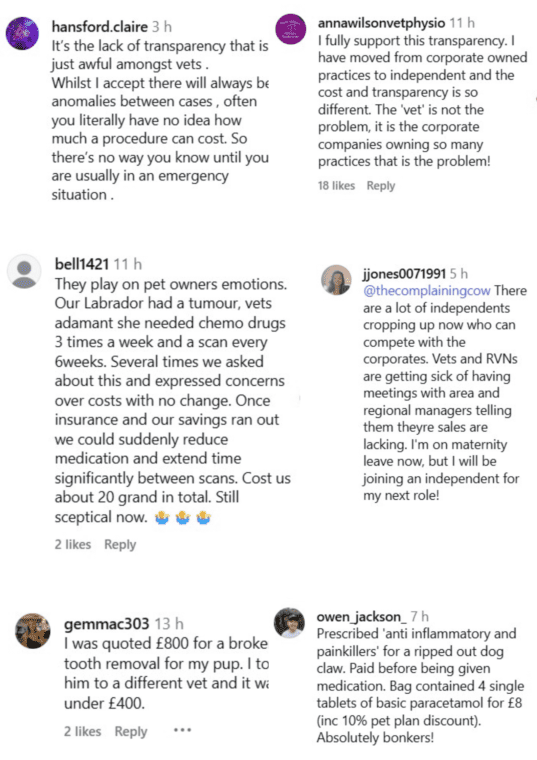
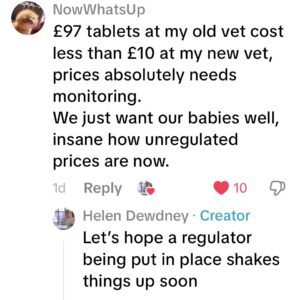
I published this video explaining some of the changes that are to come into force over the next year or so. I asked what people thought.
@thecomplainingcow Some changes could start this year 👀 Will it actually help? 👇 #consumerrights #pets #vetbills #costofliving #consumerprotection
Consumers in general welcomed the changes, some of which are significant. Interestingly, and perhaps unsurprisingly, one vet said she would be moving to work in an independent establishment because the management of the chain where he worked was too pushy on sales targets.

How to complain about a vet
 Under the Consumer Rights Act 2015 vets must provide services with reasonable care and skill. If you are unhappy with the service you have received then you should complain, following the Top 20 Tips on how to complain effectively.
You should give the vet one chance at putting the matter right. If you need to go to another vet to redo the work then the first vet should pay for this.
If the vet is signed up to the Veterinary Client Mediation Service you will be able to use mediation for free and it is binding if both parties agree on an outcome.
More help with complaining effectively

For masses of information, tips, guidance, laws and regulations and templates GET THE BOOK! How To Complain: The ESSENTIAL Consumer Guide to Getting REFUNDS, Redress and RESULTS!

101 Habits of an Effective Complainer is designed to improve the way you look at and make complaints. Each page gives you a complaining habit to consider and an example of how and why it empowers you to become more effective in getting the results you want.

Save yourself time and effort finding the laws and wording a letter of complaint and download a template, fill in your details and get that redress.
Purchase downloadable templates to gain redress.
The CMA consultation