Involuntary PPM – Supplier Code of Practice
Today (18 April 2023) Ofgem published its updated Involuntary PPM – Supplier Code of Practice. The updated code aims to prevent suppliers from forcing some vulnerable customers to have pre-payment meters (PPM) installed or be switched from smart meters to PPM without consent from the customer.
The Code outlines examples of ‘high risk’ customer groups for whom involuntary PPM should not be used:
“
- they are unable to operate the PPM;
- they require a continuous supply for health reasons, eg, heart/lung ventilators, dialysis
- they have a medical dependency on a warm home, eg, due to illnesses such as emphysema, chronic bronchitis, sickle cell disease
- they are very elderly (85+) without support in the home; and
- they have chronic/severe or terminal health conditions such as cancer, cardiovascular/respiratory disease and organ failure.”
The Code also identifies a second group, medium risk customers: over 75s, under 5s, serious medical and mental health conditions and disabilities, and temporary situations such as pregnancy or bereavement. For these households, suppliers must conduct an affordability assessment and if the customer is at risk of significant harm from disconnection because they cannot afford a reasonable level of energy consumption, the supplier cannot proceed with the involuntary PPM.
My comments!
I welcome the changes but they do not go far enough. I want to see the regulator do more to enforce the current regulations.
Even under previous rules, getting a court warrant to force-fit a pre-payment meter had to be a ‘last resort’ only after ‘all reasonable steps have been taken to agree payment’. Vulnerable customers should not be fitted with one at all if they don’t want one. Yet it took a Times investigation to find that this was not the case. That forced the regulator to take action. It should not need a journalist to do the regulator’s job for them!
When I asked Ofgem about this, it provided the following background information:
“We want it to be legally enforceable via suppliers Standard Licence Conditions. We have enforcement powers under the Electricity Act 1986 and Gas Act 1989 – with powers to investigate, make orders or issue financial penalties. All suppliers have signed up to the Code in this initial stage – and we will monitor its implementation carefully.” It did not answer how it would do this.
“Where the Code goes further, suppliers have publicly committed to abiding by it and will suffer reputational impacts from breaching it. We reserve the option of naming and shaming those that don’t stick to their commitments.”
What the End Fuel Poverty Coalition says
Simon Francis from the End Fuel Poverty Coalition is dismayed that Ofgem has not accepted the recommendations it put forward or those of many of its members. He says:
“We’re a bit puzzled as to how they have arrived at their categorisations, for example how can someone with Alzheimers or Cerebral Palsy be only seen as medium risk? These groups will now be subject to some form of energy firm health inspection which sounds very troubling.”
I acknowledge that there are a number of measures in the guidance to help protect customers, such as requiring sufficient training of lead supplier representatives and the use of audio recording or body camera on all site welfare and installation visits (unless the customer objects). This will have to be available for audit. But I question the lack of detail on how Ofgem will monitor this.
Call for stopping all forced installations
I also question why Ofgem hasn’t explicitly forbidden the installation of pre-payment meters and the remote switching of “smart” meters into pre-payment mode. Expressly forbidding pre-payment meters would provide a much clearer and more transparent message for both suppliers and consumers. It would also make processes more simple (cheaper) for suppliers and Ofgem to monitor.
Francis agrees with me, suggesting that a “full legal ban” on PPMs is needed now:
“We do understand that these regulations will be placed into the licence conditions which energy firms operate under, but the only penalty for breaching them are fines. We would prefer to see a full legal ban on the forced transfer of households onto prepayment meters and a discussion with the Government about how we solve the growing energy debt mountain, rather than return to the failed system of the past.”
Energy Ombudsman
A spokesperson for the energy Ombudsman says “Regarding the number of complaints we see around forced prepayment meters, it’s less than one per cent of the total volume that come into us.”
Further help with energy complaints and paying bills

If you have been forced to have a PPM or had one wrongly installed contact your energy company to get it removed and receive compensation. If it refuses, take the matter to the Energy Ombudsman.
Households on PPM, currently pay more on average than direct debit customers but Jeremy Hunt in the budget this year announced that from July four million households won’t pay more than those on direct debits.
How to save money on and complain about, energy
Energy runs out for Utility Warehouse customer story regarding appalling treatment of a vulnerable customer being forced onto a PPM and the work it took for me to get her compensation!
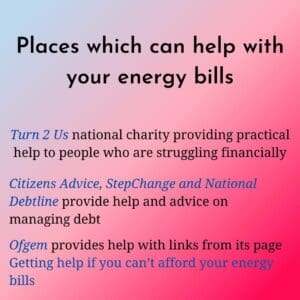
How to get help with paying for energy bills
Further help with consumer issues
Top 20 Tips How to complain effectively
If you need more help, information and tips with how to quote Acts, template letters and advice on how to complain effectively don’t forget the GET THE BOOK! How To Complain: The ESSENTIAL Consumer Guide to Getting REFUNDS, Redress and RESULTS!
101 Habits of an Effective Complainer provides you with more tips
Purchase and download Templates for complaining about utilities
Purchase and download templates to gain redress swiftly