

Ways to help a school prosper
Schools are under constant pressure to do more with less, whilst households have an ever smaller amount to donate. Typically, over 80% of a school’s budget is spent on staff, leaving little for anything beyond the basics.
However, you can help enrich the curriculum without giving money. Just pick anything from the following list.
This is a longer version of the article From governor to reading buddy: seven ways to help a school prosper that appeared in the Guardian 29 April 2025.
Speak in schools

Speakers can help motivate and inspire pupils, raising aspirations, boosting confidence and demonstrating possible career paths.
You can find speaking opportunities through the free Inspiring Schools service. Volunteers range from apprentices to CEOs, across a range of sectors.
Eloise Skinner is a psychotherapist and author who volunteers through the Mayor of London’s Enterprise Adviser Network. She says:
“The role’s quite flexible, and can encompass all aspects of career support – from strategic planning and oversight of careers activities, to in-person delivery of careers workshops, talks and events which I tend to get involved with, taking 5-10 hours each term.”


Think of your own network of friends and colleagues. As a governor at Heathcote Secondary and Science College in London, in London, I’ve brought in speakers such as Rob Unsworth, a former editor of the BBC’s The One Show, to discuss media careers and the TV judge Rob Rinder, who regularly covers law.
TV Judge Rinder and ABBA Voyage star in National Careers Week for Heathcote pupils
Too often, bright young minds are held back simply because they’ve never met a lawyer who looks or sounds like them. By stepping into the classroom, I’m showing them that the legal world isn’t just for the privileged few – it’s for anyone with the grit and the brains,” Rinder says.
Could someone you know talk about, motivation, disability awareness, entrepreneurship, the charity sector, medicine or science, for instance? It’s a great way of gaining experience and getting footage and reviews too.
Run or support workshops and lessons
Outside experts provide access to those who have already found their path and are willing to share their journey. Staff can’t be specialists in every area in which they teach, so external experts help extend pupils’ knowledge and skills.
A professional dancer in any specialism could offer dance lessons, a hotel chef could inspire pupils in fine dining and a visiting business strategist could bring real-life experience to economics courses.
Art isn’t just painting and drawing – art departments welcome practising artist visits using different media in practical lessons. Schools can invite authors to run creative writing workshops.
Become a school governor
An important part of a school’s leadership, a governor helps provide strategic direction for its running. The role usually involves termly meetings of the full governing body and membership, and meetings of one of the subgroups. You will also be expected to be on any complaint, exclusion and disciplinary panels. There is always a lot of paperwork to read.
The National Governor Association provides lots of information and advice about what the role involves. Schools inform parents or carers about vacancies on their governing body. You can also sign up with Governors for Schools, a service in England that matches schools with volunteers.
Schools inform parents/carers about vacancies on their Governing Body. You can also sign up with Governors for Schools, a service which matches schools and volunteers.
Run an after school club

After-school clubs enrich pupils’ development. If you, or anyone you know, has the skills, knowledge, experience and time, schools would welcome specialisms such as web design, drama, art, entrepreneurship or sport. Parenting coach Jo Zwierzchaczewski-Mitchelhill committed about two hours every week in term time, including the hour of the club.
“I loved seeing the kids be active in sport and gain confidence in their ability as netball players. Also how they would gel as a team and the team spirit they developed. I gained personal satisfaction from seeing the children progress.”
Become a mentor or other volunteer
One-to-one support or small group targeted work (provided by the teacher) can have a huge impact on pupils’ learning and results. Especially true for pupils have special educational needs, or struggle in one area of learning.
Mummy Matters blogger Sabina Green volunteered regularly as a Reading Buddy at Deeping St James Community Primary School, near Peterborough. She attended a workshop learning strategies for how to listen and question about what they were reading, as well as how to assist them. Sabina found it particularly helpful for neurodiverse children, who seemed to read very well but absorbed little information. She says it was especially good
Having them read small sections and discuss helped them recall information and build a mental picture, boosting their confidence.”
She volunteered between one and two hours a week, but some grandparents volunteered daily as reading buddies.
Mentors can greatly impact a young person’s life, helping with personal and educational development by sharing their experience. You or someone you know could offer to mentor and support a young person facing challenges like drugs, trauma, family issues or mental health. If you think you can help, contact the school’s pastoral lead member of staff to discuss how to get involved. Typically, it’s about an hour a week, but it depends on everyone’s needs.
Be a student helping students
If you yourself are studying and the course involves a placement, consider whether you could do it in a school. Whether teacher training, drama therapy, social care, counselling, theatre in education, business course or degree, a Masters or even a PhD, many include placement elements. These could be held in schools which will benefit the student whilst providing additional value to pupils.
If the school agrees, request a placement or put the placement co-ordinator in touch with the school
Donate “in kind”
Schools get through an unbelievable amount of paper! Do you, or anyone you know, work at a printers or warehouse? Standard A4 white paper is useful, as well as paper of differing sizes, colours and textures, for art classes. Could you offer to produce leaflets for marketing or fundraising?
Professional organiser Siân Pelleschi donates unwanted items, such as books and clothes, from clients to her children’s local schools. She also works with older generation crafters and regularly donates the unwanted or left over craft materials.
My children’s schools are often in need of different materials they can use for projects or classes – so I tend to build up crafting items – pens, paper, paints … anything they can use in class with the younger children – and then take them in when I have enough to hand over that would be of use,”
Donations can support development for staff and pupils. You, or someone you know, may be able to offer a free INSET day or copies of appropriate books. Andy Coley gave 20 copies of his new book “Leadership is a Skill”* to the senior team of his local school federation.
Before turning up with a donation, do check that the school wants what you have to give.
Start or support the PTA/PTFA (Parents, Teacher, Friends Association)
If it doesn’t already exist, talk to the headteacher or a leadership team member to ask if they would like one established.
Contact parents and carers through the newsletter asking who would like to be involved and ask the school to share a contact email address. You can also garner interest at the school gates!
When you’ve gained interest, arrange your first meeting at a mutually convenient time for the school and parents. Explain the aims and what it could do. Identify skills and people willing to becoming members and take key roles, such as Chairperson, secretary and treasurer. Ask for ideas and start planning your first fundraiser. The website Parentkind offers lots of resources to help you set up a group, including guides to the different roles you will need to recruit people to.
Where there is an existing PTA you could support it by helping to organise or publicise events, or by volunteering at and attending them.
Start or contribute to the school shop
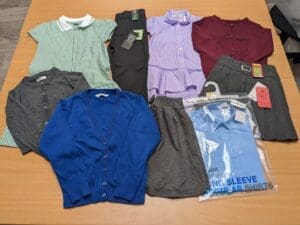
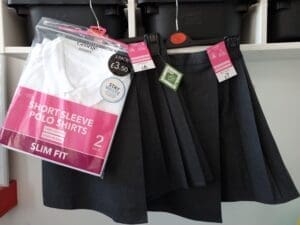
Helping the school community and supporting the school, uniform shops are popular, usually run each term by the PTA/PTFA. Donate shirts, skirts, trousers, blazers and jumpers that no longer fit and can be sold to raise funds.
Donate other people’s money!
Register and shop through Easyfundraising.org which has partnered with over 7,000 brands, including big names like Amazon, John Lewis and supermarkets, who will donate part of your spending to a cause of your choice. Similarly, Give as you Live Online.
Recycle ink cartridges at recycle4charity which will donate money to a good cause of your choosing. Add your school if it is not listed.
Are you a bid writer or know one? Schools can apply for funding up to £20,000 through Awards for All in England. (There are also programmes for Scotland, Wales and Northern Ireland) to spend on projects.
More pots are available if the PTA/PTFA becomes a charity.
Support the school in supporting your child
Attend parents’ evenings, read newsletters, get to know your child’s teachers and ask any questions that come up! Keep communicating with the school’s staff and contact them with any concerns, however small you may think they are.
Encourage your child to do their homework! Give them time and space, if possible. Ask your child about their time at school and their work (even if all you get is grunts!), showing that you are interested and value their education. Where possible, help them with their homework and revision for exams, using the resources that the school provides.
Education doesn’t just happen at school. Discuss current affairs, issues that interest them, programmes on the television, etc.
A healthy mind and a healthy body help with learning. Encourage your child to eat healthily and undertake regular physical activity.
Supporting your business

Helping schools like this can help your business too. For other ways to help your business see: How to Get Free PR and Be Paid For It: 280 ways to raise your business profile.
- affiliate link