

Storm and flood insurance claims
Storm Isha is the latest in a number of severe storms to hit the UK.
So what are your rights and how should go about claiming on your insurance?
How to claim on your insurance for flood and storm damage
1) In the first instance put in a claim as quickly as you can. When events like this occur there is naturally an increase in claims but insurance companies still have the same number of loss adjustors to check properties, so they will be much in demand. Inform them over the phone and in writing. They will talk through the process with you. Inform the insurer of immediate needs, such as any vulnerability, immediate accommodation and payments needed for essentials. Get fans and humidifiers in as soon as you can, if you have been affected by floodwater.
2) The clean up after a storm usually takes a long time and you will want to get started as soon as possible. Mark a line on the walls for the height of the water. Make a list of everything damaged, take photos and video so you have the evidence of your damaged goods that clearly can’t be repaired and may need to be thrown away. It is best to get written agreement from the insurance company for this to save any issues further down the line.
Flooring can trap the water, so get it out as quick as you can, by taking a cutting from the carpet or laminate flooring.
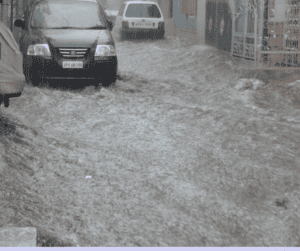 3) If your insurance company refuses to pay out and you feel it should, threaten them with referring the case to the Financial Ombudsman Service (FOS) and if necessary take them to the FOS. It is free to do this, so you have nothing to lose. The FOS says that in regards to insurance claims for storm damage the most common complaints they get are around what constitutes a storm, whether the damage was caused by the storm and the costs of the repairs. The FOS uses its own definition of what constitutes a storm and not the insurer’s. “a storm generally involves violent winds, usually accompanied by rain, hail or snow.” For more details see FOS and storm damage.
4) Your insurance company may tell you that you are not covered for something that you were led to believe was included in your policy. For example, storm damage for structure and contents but not being able to claim for contents. It may be in breach of the Consumer Protection from Unfair Trading Regulations 2008 due to a misleading practice and you should take the case to the FOS.
5) Ask your insurer to help protect your property in future when it repairs it, such as raised power sockets, plastic flooring that looks like laminate, raising appliances, air brick covers, concrete flooring with a damp-proof membrane or ceramic tiles and rugs.
6) Check your policy thoroughly to see what it will cover you for as it may be that you can book emergency accommodation and/or emergency repairs.
7) Make a list of everything you want to cover and agree with the insurer, such as things mentioned above. Ensure you get in writing what they will offer to do and when. Some may use their own contractors and others may let you find your own or just make a pay out for you to find your own people.
Choosing an insurance company in future
 8) Getting insurance in an area of high flood risk can be hard but research is key and worth taking the time to do. Use comparison websites on the Internet and also then go direct to the one you choose, as it may have a better deal than the one it offers on the comparison sites.
9) When you have undertaken your research and found the cheapest policy that covers all your needs, phone your current company and see if they can beat it. This is a tactic that often works for other types of insurance, such as motor vehicles, too.
10) Most policies will have an “excess” which is an amount you will still have to pay for a claim, even though you have insurance. Check the small print. It would be easy to just go for the cheapest but see what it includes and check the excess and the amount you want to pay if you need to make a claim.
11) Use cashback sites which will give you money back after you pay for your policy. The main ones are TopCashback* and Quidco*which are the and for your child’s nominated child’s bank account, consider Kidstart.* will give you money back after you have paid for your policy
12) Check the Flood Re Set up in 2016, it is funded by insurers through a levy. This provides £180 million annually to administer and reimburse insurers in certain flood claim cases. The insurer is charged a fixed premium based on the Council Tax band of the property, not the flood risk, to keep the price down, with a fixed excess of £250. The insurer is choosing to pass on the flood risk element of the policy to Flood Re. If you are flooded the insurer will pay the claim and then it will claim from the Flood Re scheme.
Power cuts and your rights
13) In the case of a cut in your gas or electricity supply, it is your distribution network operator (DNO), not the supplier, who is responsible. Complain to them, if necessary. You can find out who your gas transporter is here and electricity supplier here.
14) In the event of an unplanned power cut you are entitled to set amounts of compensation, paid by your supplier. For electricity this varies depending upon the number of homes affected, how long you are without supply and how Ofgem categorises a storm.
15) For gas power cuts you will be paid £30 plus £30 for each 24-hour period without gas. More on power cuts (e.g. multiple cuts) can be found on Ofgem Know Your Rights Power Cuts
16) If you are on the Priority Services Register or a cut was due to bad weather you should receive the payment automatically. Keep an eye out though and claim if you don’t receive it.
17) For an automatic payment, you should be paid with 10 days of the end of the power supply cut and within 10 days from any claim. If not, make sure you get the extra £30 entitlement for a breach of the Quality of Service Guaranteed Standards!
18) If you have more than 4 power cuts in one year, where your supplier is to blame, you are entitled to £75 in compensation. (The year runs from 1 April to 31 March).
Further help with consumer issues
How to complain about financial institutions
Top 20 Tips How to complain effectively
If you need more help, information and tips with how to quote Acts, template letters and advice on how to complain effectively don’t forget the GET THE BOOK! How To Complain: The ESSENTIAL Consumer Guide to Getting REFUNDS, Redress and RESULTS!

101 Habits of an Effective Complainer provides you with more tips

Purchase and download templates to gain redress swiftly