Is there bias in the language used in AI?
As the debates about AI continue one that is beginning to get more coverage is the bias in language. I invited Faustina to write a blog post on this.
Faustina Anyanwu
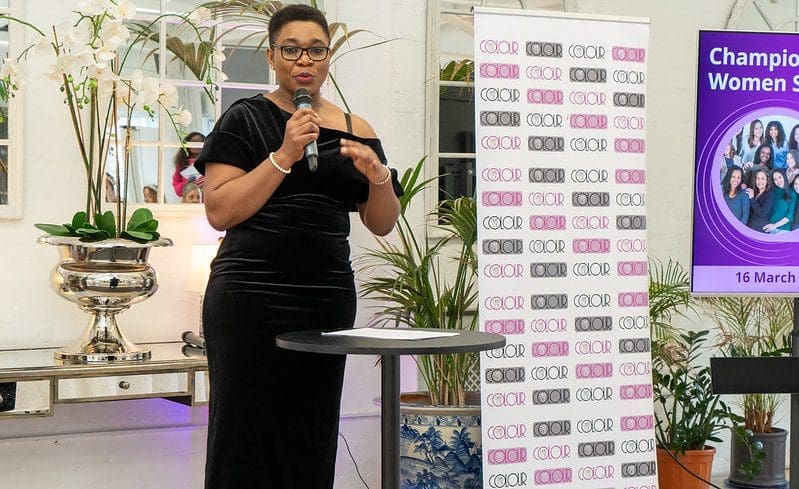
Faustina Anyanwu, Entrepreneur and Founder of Divasofcolour.com, a leading UK-based International Women’s Forum that curates high-impact conferences and networking opportunities for female entrepreneurs and professionals.
AI and bias in language
Recently a Twitter X user, Paul Graham sparked a serious debate on the open source platform. In his Tweet, Paul claimed to have received a cold email proposal and that as soon as he saw the word ‘delve’, he immediately binned the message as he assumed it had been written by AI. He followed his tweet with a graph as a proof of indication that when the word delve appears on an article, there’s a great chance that it had been written with an AI tool. In agreement, another user enlisted the words; “safeguard,” “robust,” and “demystify” as supposedly telltale signs of a machine writer, not a human one.
These claims quickly erupted into a huge debate among users from far and wide, with mostly people from post-British Colonies the most vocal, sharing their experiences in both job search and educational settings.
As I ‘delve’ further into the thread, arguments and counter arguments, it became clear that this theory raises great concerns about unintended bias and may unfairly penalise skilled writers, especially those of us from an English as Second Language (ESL) background.
I started my BSc Nursing studies in 2021, and during that time, my work was being graded in the 70s and above. However to my surprise, the modules I wrote towards the end of 2023 were being flagged and there wouldn’t be any feedforward on exactly why it had been flagged or marked down. At the time, I didn’t think about AI, I would just try to rewrite and search various other presentations close to my topic and check if there was something I did wrong. Also, recently, I created an article in my workplace, and my line manager insinuated that I had used AI. None of these made sense then as I didn’t even have a chatGPT account let alone using it.
Dynamics of Language
Here’s the thing, every language is dynamic and constantly evolving and sometimes also revolving. So, singling out specific words as telltale for an AI or the belief that “proper” English has a limited vocabulary is simply untrue. Language is a living, breathing entity that constantly evolves. New words emerge, and existing ones take on fresh meanings. Attributing authorship solely based on a handful of words reeks of prescriptivism, a harmful approach that seeks to dictate how language “should” be used.
For someone like me who is an ESL speaker, I’m greatly concerned. We are taught to write Queen’s English in any formal writing and as such, we are very expressive in our written work in the use of elaborate vocabularies, as we’re often made to read and learn new words. The more elaborate a word is, the more it is used to show our brilliance more commonly. Contrast this with the fact that we may be hindered in spoken English by accents or pronunciation challenges, writing allows us to fully explore the potentials of the English language.
Like my mother, a linguistics teacher, she uses complex words like orchestrate, laissez-faire, and perambulate so casually in everyday talk, you can then imagine her use of words in her writing. And to learn that we may find ourselves unfairly penalised for using a rich vocabulary in our writing is quite disturbing. And quite astounding to have a person critique the use of appropriate and concise words in such a formal email.
Nuance Vs assumption/bias
Surely, the proliferation of AI content generation can certainly create a concern in establishing originality and creativity. However, this needs to be approached in a more nuanced manner than is being projected. As such, context should matter the most. Understanding usage in a written piece should be nuanced rather than assumed. Focusing on a handful of words because they seem popular with AI is not helpful, at all. A more effective approach should be looking at the overall structure, flow, and coherence of the piece and clarity of expressions, as well as the depth of the argument. Checking if the writing feels robotic and repetitive, should be the areas to watch out for the red flags, not the presence of a specific word or group of words.
Unreliability of AI Detectors
Sadly, even the AI detectors are not sophisticated enough to accurately analyse text’s originality. For example, a Twitter X user said, when they wrote their thesis, an external supervisor said he had plagiarised and was made to rewrite a chapter in the presence of the supervisor, and at the end, the AI detector still gave his work a 32% AI generated. Another user said, her brother was getting called out as using AI to write his postgraduate assignments, and was made to write a paragraph on the spot in the class and again the detector ruled AI generated.
So, this extends far beyond a Twitter spat between Graham and his followers. It’s a serious issue impacting people’s lives, undermining creativity and writing abilities. Opportunities are being denied, and students from diverse educational backgrounds are unfairly being penalised based on their use of words. In all, it’s important to pay attention to one’s own bias and be open to embrace diversity and know that no one group is monolithic. Students have varying backgrounds and exposure to the language, style of writing and use of vocabulary.
Future of Creative writing in the AI era
AI is great, but let’s not forget that they are just tools and are not here to replace human writers. Rather, they can be powerful aids, helping us explore ideas, research topics, and refine our writing.
Historically, the English language has greatly influenced our modern civilization and thus has greatly evolved beyond the indigenous usage and style. Also, society, culture (like music, fashion, TV), trends, generational norms affect and influence language usage. I remember when I first came to the UK, the words; obviously, apparently, like, literally, and others were rampantly used and often misused too. But that was the trend at the time and so most people were stuck with that style of speaking. Same could be true this time. Surely, there might be influence of AI style trends sipping into everyday writing style and word usage as we all read other people’s work and get inspiration from what we deem great and creative, not necessarily that one has used AI to generate their work.
The true essence of language lies in its ability to help us connect, create, and share our unique perspectives with the world. The fear of AI should not be allowed to stifle this creativity or lead to discriminatory practices against those who choose to express themselves with a rich and varied vocabulary.
Have you struggled with language and AI?