
Incentives for positive reviews are still a big problem
Online reviews can be very helpful when making a purchasing decision but they are becoming more and more difficult to trust. A new investigation by Which? demonstrates how online reviews may not be all that they seem.
The consumer champion Which? revealed today that One in 10 Amazon customers offered ‘bribes’ for positive reviews.
Their investigation reveals:
“One in 10 Amazon shoppers could have been offered an incentive in exchange for a five-star review of an Amazon product in the last year”.
The research carried out in July 2023 revealed that 10% of British consumers who had purchased an item from Amazon in the previous year had received offers of Amazon gifts cards, refunds and free products in exchange for positive reviews and in some instances changing them. Which? suggests that as many as 4.5million consumers may have been targetted.
8% of British Amazon customers “told Which? that they were asked by a seller, via email or other communication method, to leave a five-star review in exchange for an incentive.” And that 4% “were offered a reward for changing a negative review to a positive one.”
Some consumers told Which? that they had changed their reviews when they got an incentive.
Government (in)action
The government is currently undertaking a clampdown on fake reviews and hidden fees to help customers cut the costs of living consultation. The Digital Markets, Competition and Consumers Bill is currently working its way through the House of Parliament and is waiting for its third reading. This was drawn up from the consultation Reforming Competition and Consumer Policy. I responded to it – Reviews: A Government Consultation.
The closing date for responses was 1 October 2021. This consultation covered fake reviews and asked seven questions around this topic, including about commissioning and incentivising. The subject of reviews is not currently not covered at all in the new Bill.
Which? is calling on the government to ensure that there is legal certainty in the Bill. They believe that “hosting reviews without taking reasonable and proportionate steps to ensure they are genuine” should be made a “criminal offence” and want to see additional work done on “offences on the buying and selling of reviews”. Which? says that “This would help guarantee tough action is taken to crack down on the problem.”
A spokesperson for Which? said:
“The current drafting of the Bill does not specifically mention reviews. Instead the government is currently running a fake reviews consultation and says it intends to tackle the issue through secondary legislation using general powers established in the Bill. More details in this government press release.
Which? is calling for fake reviews to be included on the face of the Bill and made a criminal offence as this will allow regulators to take tough action to crack down on the problem.”
Business Minister Kevin Hollinrake said:
“Fake reviews are totally unfair, and dupe customers into purchasing products that just aren’t up to scratch. That’s why we are consulting with industry on this very issue as we speak.
“This consultation will feed into our Digital Markets, Competition and Consumers Bill, and is aimed at clamping down on these fake reviews and holding companies to account who purchase or host these bogus reviews.”
Rocio Concha, Which? Director of Policy and Advocacy, said:
“The government must make hosting fake reviews a criminal offence in its Digital Markets, Competition and Consumers Bill so that regulators can take strong action to crack down on the problem.”
For examples of changing a negative into a positive review, incentives for positive reviews, review merging, sellers “harassing” customers and suspicious reviews on products despatched by Amazon see the full Which? article One in 10 Amazon customers offered ‘bribes’ for positive reviews, Which? finds.
Fake reviews nothing new
In October 2018 Which? published Which? goes undercover to expose fake and paid-for reviews
Then, in early 2019, Which? undertook extensive research and uncovered thousands of members of fake review groups, containing fake reviews where people had been paid or given the item for free.
It revealed its findings in July 2019 in the report Bribery, hacking and gaming the system: the tactics used to post fake reviews online. At the time the Competition and Markets Authority (CMA) announced that Facebook and eBay must tackle the issue. Facebook even claimed that the groups had already been removed.
However, Which? still found 20 groups clearly labelled as “review groups” soon after Facebook’s announcement.
CMA work on fake reviews
On 8 January 2020 the CMA announced that eBay had “signed up to agreements to better identify, investigate and respond to fake and misleading reviews”, after being told by the CMA to address this issue.
See my article 3 out of 5 stars for CMA’s action so far on fake reviews for more details.
Amazon was not involved in the CMA’s work in this area.
How to use reviews
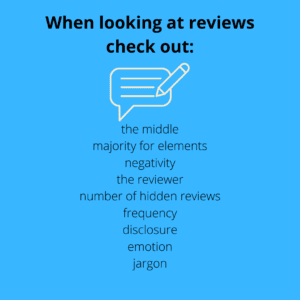
With more and more fake reviews on the Internet, it is becoming harder to trust what should be a really useful tool in making purchasing decisions. See How to use customer reviews for help in spotting fake reviews and how to use the review pages.
If you have have received direct contact from sellers offering compensation of any kind, you can send evidence to Amazon by emailing:
report-review-compensation@amazon.co.uk
with details of the product name and a photo or screenshot of the compensation offer.